
By
 Copy URL to Clipboard
Shipping a car from state to state usually involves 5 steps: compare quotes, choose open or enclosed transport, verify the carrier’s FMCSA registration and insurance, prepare the vehicle, and sign the bill of lading at pickup. Cost depends mainly on distance, vehicle type, trailer type, and delivery speed.
Shipping rates to transport a car from state to state in the U.S. vary due to factors like carrier service rates, federal tags or permits, and freight details like car count and total shipment weight.
The U.S. Department of Transportation (DOT) is a government agency that oversees civilian and commercial transportation, and shippers may need to register their car with their state’s motor vehicles services before booking with a carrier to move it.
We’ve created a chart of the most common cost factors to ship a car within the United States.
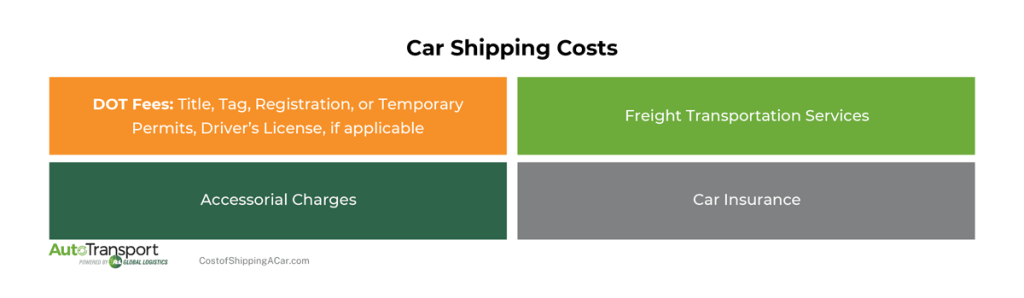
Register your car or purchase a title through the state’s DOT where your car is shipped. If you are driving the vehicle before shipping it, make sure you have active auto insurance, as the carrier may require proof of your personal insurance policy before transporting your vehicle.
FMCSA insurance filing requirements for carriers include coverage for their drivers, vehicles, and freight. Shippers can check if a carrier has an active insurance policy by using FMCSA’s Licensing and Insurance Public portal.
You should also ask your carrier for a Certificate of Insurance (COI) to verify its coverage, exclusions, and effective dates. Doing so can help you avoid coverage gaps for over, short, and damaged (OS&D) freight if you need to file a claim.
Carriers use loading and transportation equipment like flatbeds, straps, and ramps to ship cars in open transport. Open transport is a shipping mode that uses a specialized trailer with no walls and has up to two levels to haul one or multiple automobiles.
For high-value or luxury car shipments, enclosed transport, aka enclosed car shipping trailers, is used to protect freight from theft and weather elements like heat, rain, and snow. Carriers may also navigate different freight routes, a path of roads, highways, and bridges, to deliver car shipments from its origin to its destination depending on if the shipper requested expedited services.
Carriers determine the type of trailer to ship your car and other transportation details based on your specifications in the Bill of Lading (BoL). A Bill of Lading (BoL) is a shipping document that includes the shipment's pickup and delivery dates, shipper and carrier information, and any special handling instructions needed to transport the freight.
We’ve provided a chart with the required fields to fill out a BoL for your carrier to ship your car.
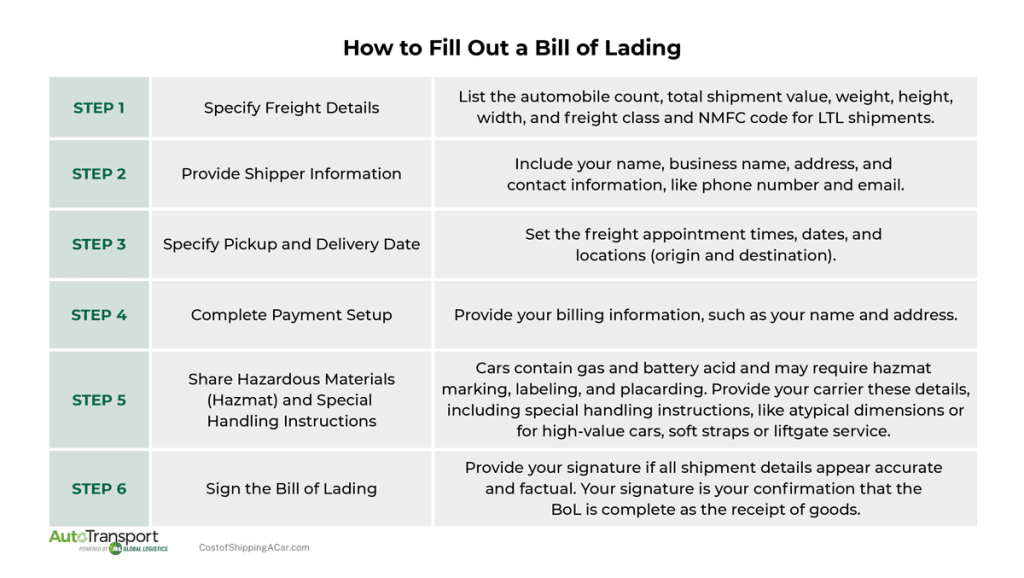
Whether you're shipping a car within your state or across state lines, you'll need a Bill of Lading (BoL). The BoL documents the shipment details, helps the carrier meet FMCSA requirements, and provides the information needed to transport your vehicle safely to its destination.
Shippers help carriers prepare for shipments by providing freight details for special handling and cargo securement during load/unload to remain in compliance with FMCSA.
The Federal Motor Carrier Safety Administration (FMCSA) Cargo Securement Rules require carriers to ship all freight according to 49 CFR Parts 300-399. Carriers must use tiedowns and block and brace methods to secure large, heavy shipments like cars in transit.
Use our checklist below to partner with your carrier and prepare your car for transportation.
This checklist helps shippers ensure their car shipment is ready for pickup to reduce carrier delays and control costs when shipping from state to state.
Common red flags in car shipping are bait and switch tactics, hostage loads, and carriers with no DOT or FMCSA verifications offering auto transportation.
A bait and switch is an automobile transportation scam that promises shippers a low rate for car shipping but increases the rate after the carrier tenders the load. Bait and switch tactics include hidden fees on your freight bill like terminal fees or undisclosed accessorial fee like fuel surcharges.
While a fuel surcharge is a common accessorial fee carriers charge to offset dynamic diesel and gas prices, carriers should always disclose with shippers the accessorial fees they are charging and why it appears on a shipper’s freight bill.
Shippers can avoid bait-and-switch pricing by asking carriers for a detailed shipping quote that includes the base rate, accessorial charges, premium services such as expedited shipping, and any mileage-based costs.
A hostage load is a scam that involves a fake carrier company or freight broker booking your car shipment for transportation only to reveal a fake issue and demand additional payment to complete delivery.
Fake companies may try to negotiate with the shipper to pay for additional services, charge unnecessary accessorial fees, or demand shippers amend the Bill of Lading and other contracts before they release the car shipment to its consignee, or receiver of the freight.
To recover from hostage loads, shippers may be able to report the car shipment as stolen to local authorities and file a claim with their car insurer to recoup financial damages.
Avoid unverified FMCSA or DOT carriers that lack the required operating authority, certifications, or documentation. Shippers can verify a carrier's credentials and safety record using FMCSA tools such as the Safety and Fitness Electronic Records (SAFER) System and the Safety Measurement System (SMS).
FMCSA requires carriers to obtain operating authority (Motor Carrier Number), U.S. Dot Number, and follow all FMCSA regulations for federal safety inspections and compliance. A Motor Carrier (MC) Number is a six to eight digit number FMCSA assigns carriers to operate commercial vehicles in the United States. A DOT Number is an eight digit number DOT requires to obtain to identify their vehicle, company, and safety information.
Shippers can use a carrier’s MC or DOT Number to search their company on SAFER or SMS and review the company’s safety rating, driver fitness, and other federal requirements to deliver freight according to FMCSA Behavior Analysis Safety Improvement Categories (BASIC) carrier safety and compliance records.
Ready to ship your car? Share your pickup location, delivery destination, vehicle type, and preferred timeline to get a quote from vetted FMCSA-registered carriers. Our team can help you compare options for open or enclosed transport and choose the best fit for your shipment.
Call (866) 322-1381 today to speak with a member of our team or get a free quote.
Sources:
Insurance Filing Requirements, FMCSA
Licensing and Insurance Public, FMCSA
State motor vehicle services, USA.gov
Cargo Securement Rules, FMCSA, 2014
FMCSA Regulations and Interpretations – 49 CFR Parts 300-399, FMCSA
What is Operating Authority (MC number) and who needs it? - FMCSA, 2023
Do I Need a USDOT Number?, FMCSA, 2025
Copy URL to Clipboard


